Block-Diagram Signal Processing
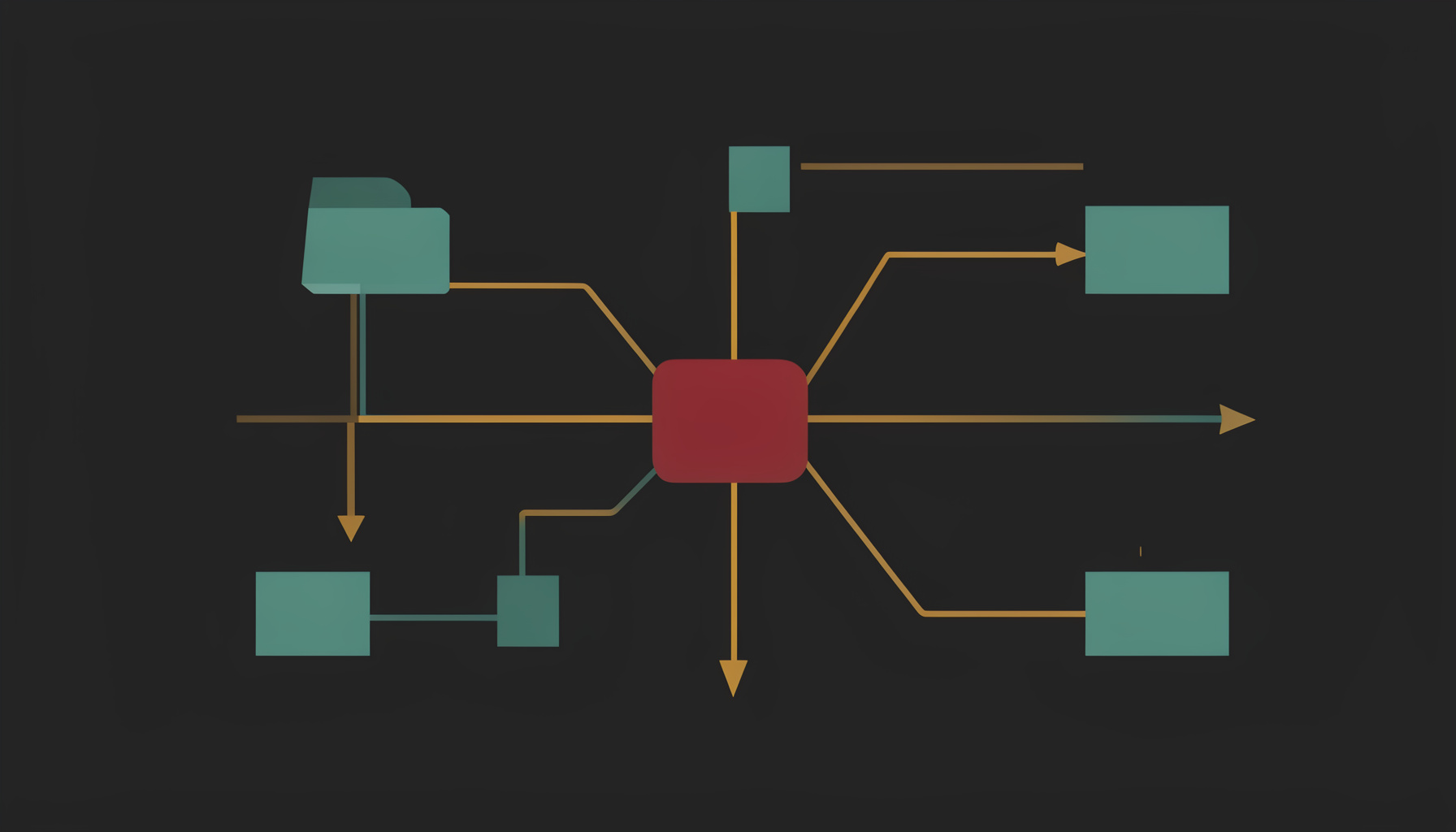
Stream processing operations in MitSyn are specified by drawing modules (also called patches) — block-diagram representations of the desired processing. Blocks are connected (wired, patched) together into networks that carry out the intended functions.
Modules are created and edited within the MitSyn environment, giving users a visual, intuitive way to design complex signal-processing chains without writing low-level code.
The stream processing environment transforms complex signal chains into visual block diagrams, where each module represents a discrete operation such as filtering, spectral analysis, or amplitude adjustment. Users connect these blocks by drawing virtual wires between inputs and outputs, establishing the flow of audio data through the processing network. This approach eliminates the need for traditional programming syntax, allowing musicians, sound designers, and researchers to focus on creative signal manipulation rather than code debugging. Every patch can be saved, modified, and reused, building a personal library of processing configurations that accelerate future work. The result is an accessible yet powerful system that bridges the gap between conceptual signal flow and practical audio transformation.
Within each module lie adjustable parameters that grant fine-grained control over the processing behavior. A filter block might expose cutoff frequency, resonance, and filter type, while a spectral module could offer window size, overlap ratio, and analysis range. These controls appear as intuitive sliders, knobs, and numeric fields arranged in a clean interface that respects the vintage aesthetic of the overall environment. Real-time feedback appears through waveform displays and spectrogram visualizations, giving immediate insight into how parameter changes affect the audio signal. This combination of block-diagram architecture with direct parameter manipulation creates a tactile, exploratory workflow suited to both experimental sound design and precise technical applications.
The modular nature of stream processing encourages experimentation through iterative refinement of signal chains. Users can insert test modules at any point in the network to monitor intermediate results, compare parallel processing paths, or audition different filter configurations before committing to a final design. Complex networks can be organized into hierarchical subpatches, keeping the visual workspace clean while maintaining deep functional complexity. This flexibility supports a wide range of applications from simple equalization and dynamic range compression to advanced spectral morphing and convolution-based effects. The system treats each stream as a living, editable document rather than a fixed process, inviting continuous exploration and creative discovery.